Hi there, we use cookies to ensure you get the best experience on our site.
Thank you! Your submission has been received!
Oops! Something went wrong while submitting the form.


A global pharmaceutical manufacturer used a hybrid digital twin to optimize its small molecule solvent swap SOP, cutting batch cycle time and total cost by 44%.
In process development, every new solvent swap SOP is still found by trial runs and slow lab assays.
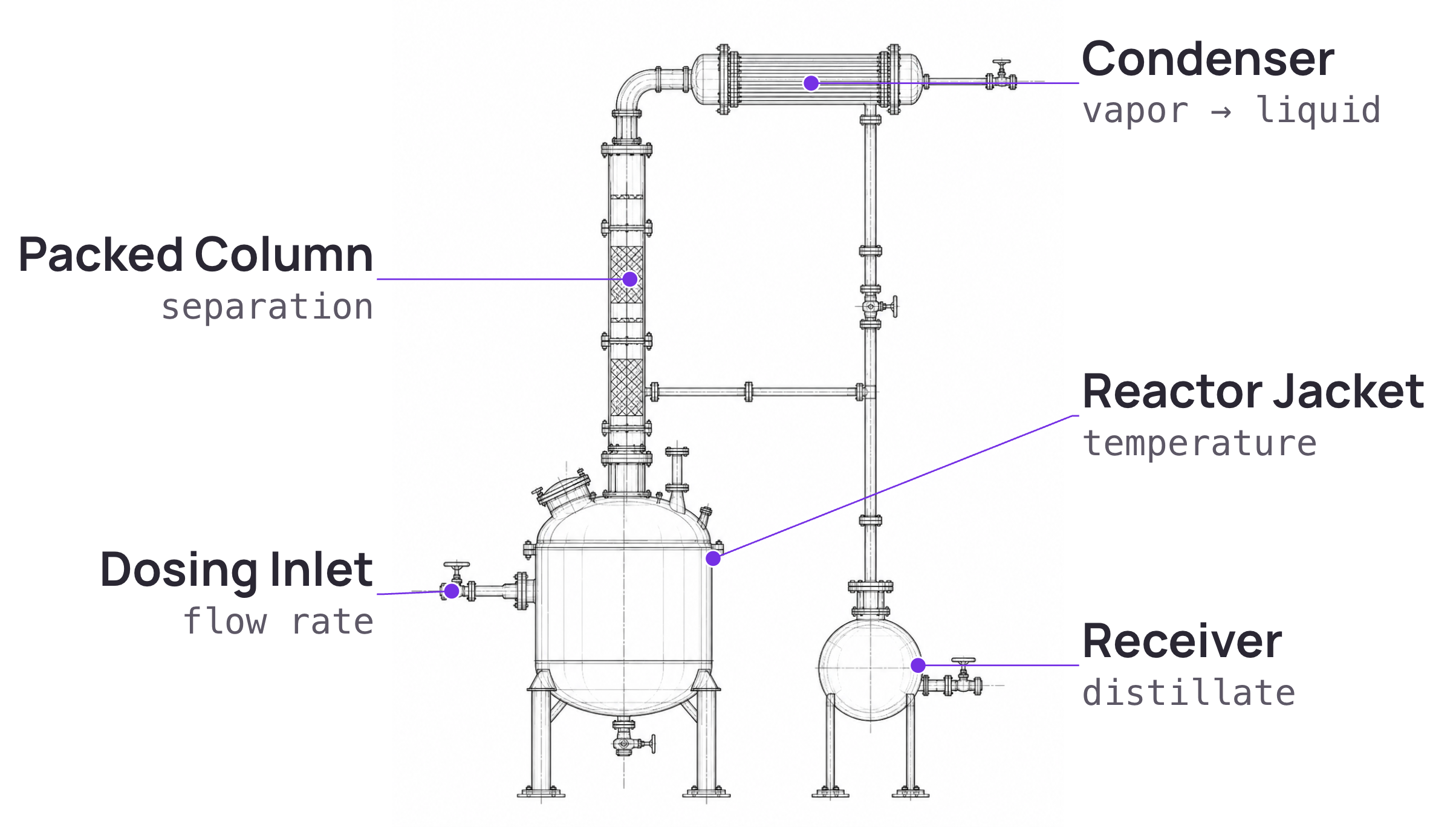
Solvent swap distillation replaces one solvent with another while keeping product quality stable. Developing a standard operating procedure (SOP) means balancing temperature, pressure, and dosing, which is traditionally achieved through many costly and time consuming lab trials.
Slow batches delay scale-up and raise production cost.
Distillate concentration is only known after offline assays, not during the run.
Each SOP change needs a new lab run, so finding a better protocol takes weeks.
Determine the optimal SOP for their solvent swap process.
Test new SOPs virtually before changing anything on the plant.
Model vessel temperature, energy use, and distillate and maintain yield while testing SOPs.
Determine the best SOP for reduced energy use, raw material consumption, and overall process costs.
Historian, ELN, and LIMS records in one dataset.
Historical batch data and engineering documents were combined into one modeling framework, organized into three categories that capture the full process context.
Temperatures, pressure, vessel level, inlet, dosing flowrate
Vessel dimensions, condenser heat transfer, column configuration
Energy consumption, solvent concentrates, material usage
A validated model was build and compared against historical data.
A first-principles simulation of the reactor and condenser is combined with embedded machine learning. The hybrid model ensures accuracy even when data is sparse, kinetics are unknown, or the process behaves nonlinearly.
Three strategies to determine a SOP.
A first-principles simulation of the reactor and condenser is combined with embedded machine learning. The hybrid model ensures accuracy even when data is sparse, kinetics are unknown, or the process behaves nonlinearly.
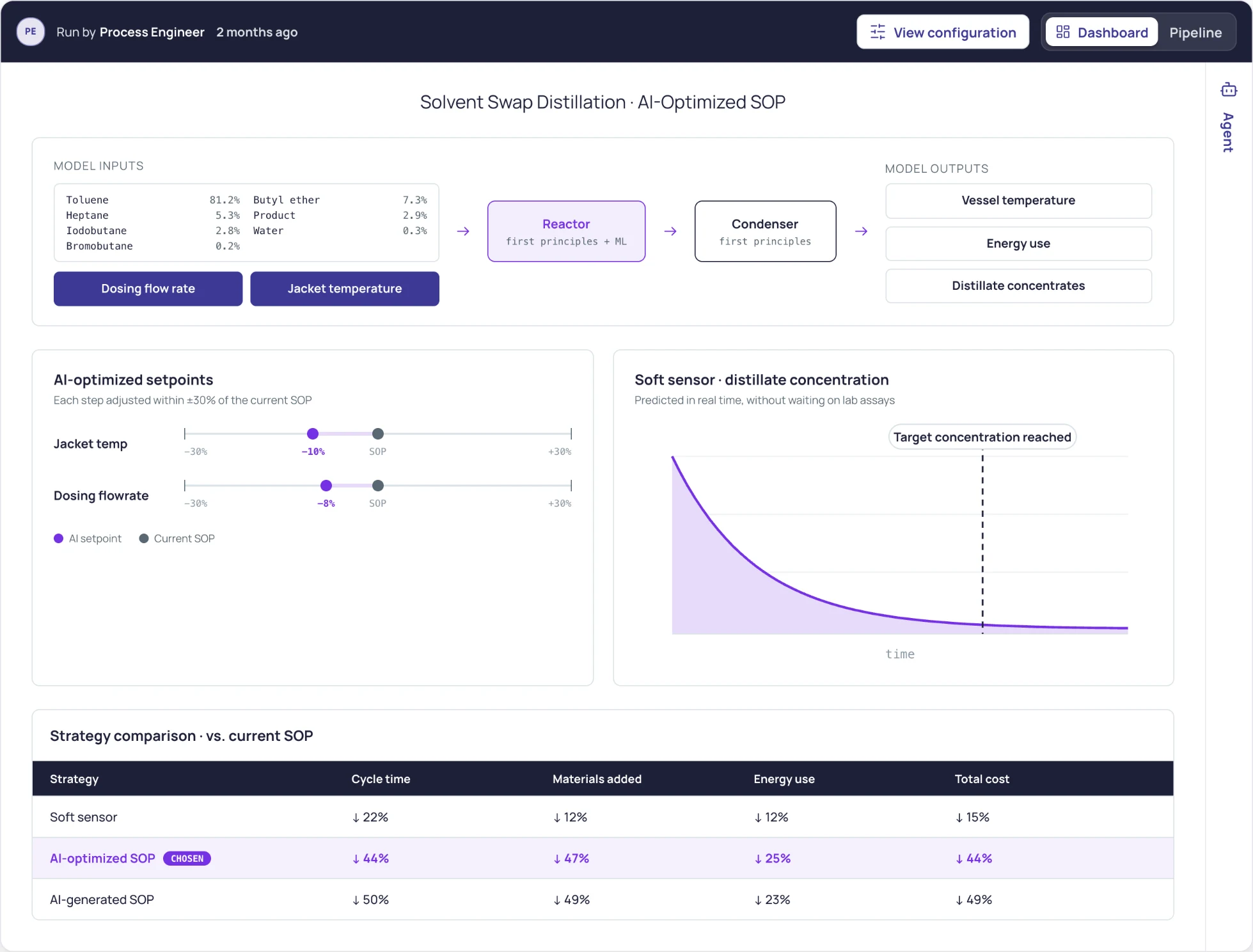
The digital twin acts as a virtual sensor, predicting distillate concentration in real time. Operators see when the target solvent composition is reached, without changing the existing procedure.
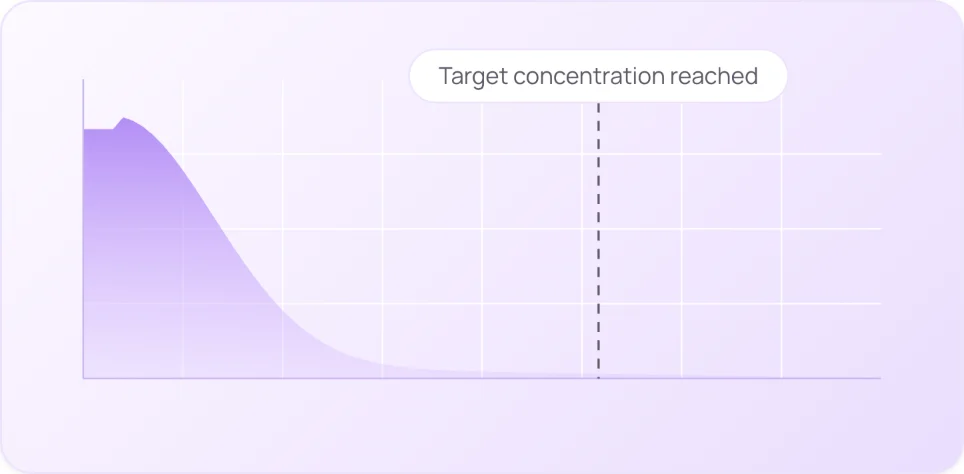
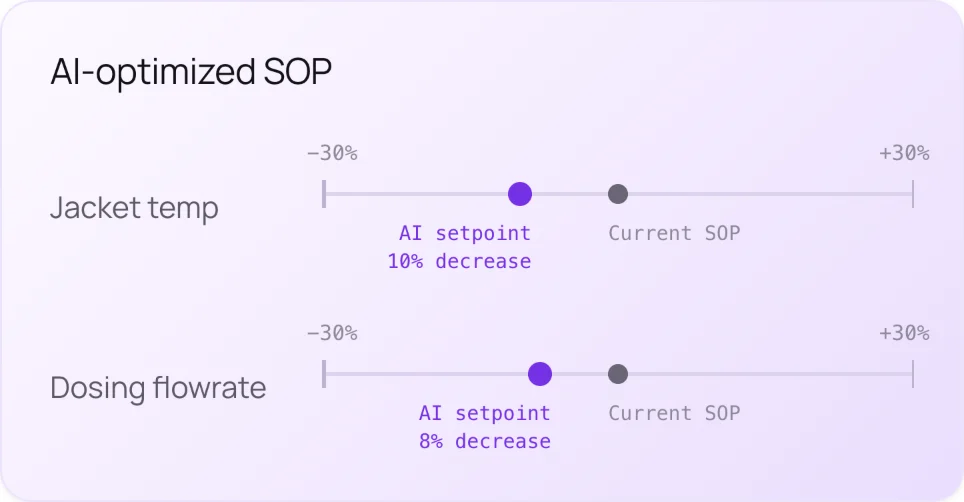
The optimizer adjusts setpoints within ±30% of the existing protocol at each step, finding better control schedules while staying inside engineering constraints.
This was the chosen strategy.
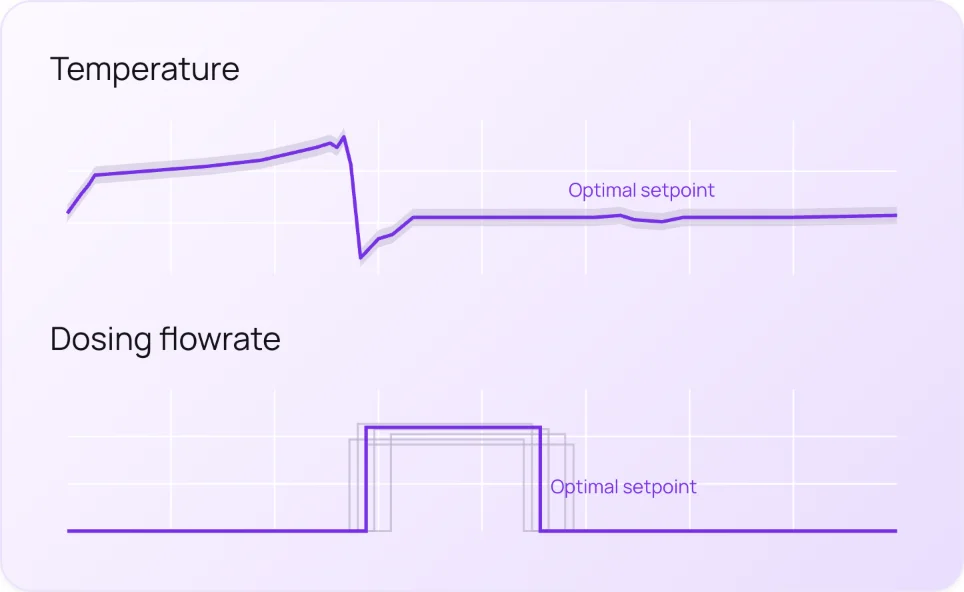
The optimizer creates entirely new control schedules within predefined limits, simulating hundreds of operating trajectories to find the optimal strategy.
The global pharmacuetical manufacturer chose the strategy with the fewest changes to the existing protocol and reduced cycle time, solvent, and energy.
The dashboard the team used, from process data to virtual scale-up.
The full case study covers the data schema, fitted parameters, validation results, and the sweep behind the 20% titer increase.
Process parameters (temperatures, pressure, vessel level, inlet dosing flowrate), equipment data (vessel dimensions, condenser heat transfer, distillation column configuration), and performance metrics (energy consumption, solvent concentrates, material usage).
Validated against historical batches, the hybrid digital twin was highly accurate, predicting key quality attributes with a mean absolute percentage error below 10%.
Instead of trial batches on production equipment, the experiments can be done virtually using a digital twin model that's validated against your historical data. It can measure the effects of your experiments on quality attributes like viscosity and PSD, virtually.
Yes, once you have a validated digital twin of your process you can use it to scale up across multiple formulations or equipments.
Every prediction is traceable to the dataset and parameters behind it, so results can be reviewed and documented within a QbD framework. Talk to us about your validation requirements.
